(L01) On Leadership

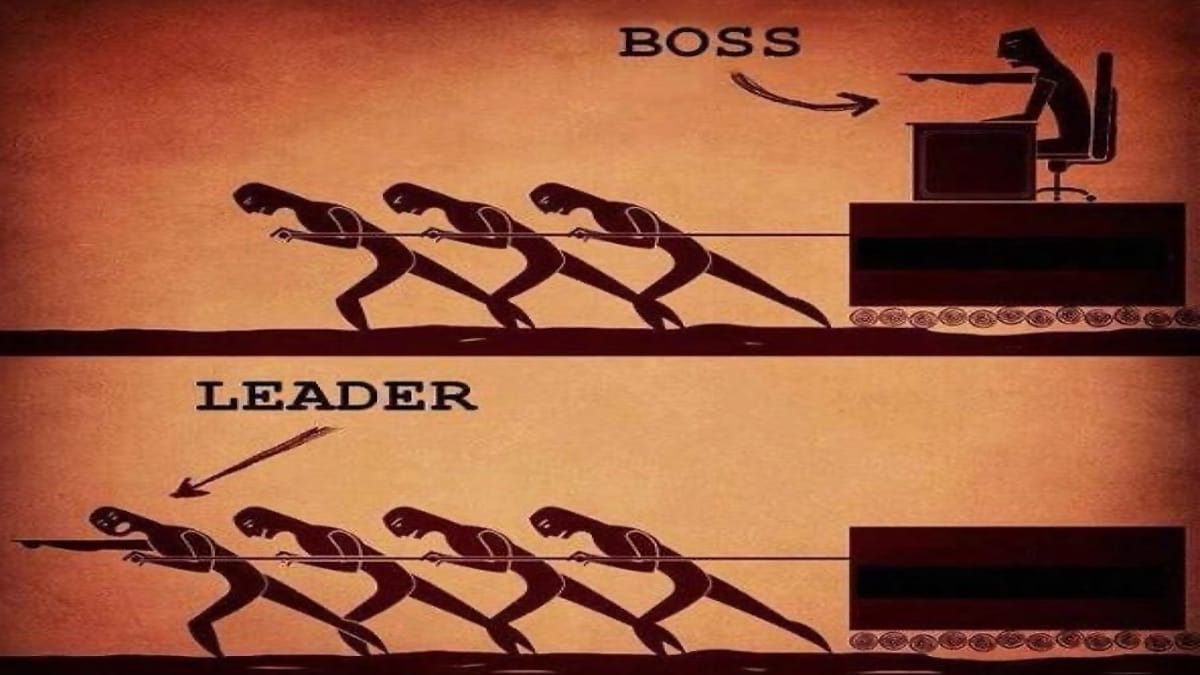
BECOMING MORE THAN A BOSS
Schools, colleges, and universities tend to fill their senior appointments with teachers promoted from instructional roles. This can be quite a culture shock. Teachers are sole professionals who teach classes and develop lessons in isolation. They supervise no-one, and are only loosely supervised themselves. A promotion to manager, department chair, director, or dean means they are suddenly responsible for the success of a whole organizational unit — and for directing, supporting, and motivating its staff.
In my second career as a college administrator, I saw many examples of this. Some instructors excelled in their new role and became genuine leaders. More than just a boss, they turned their staff into a motivated and high-performing team. Others, including some smart and talented individuals, never really made the adjustment — showing little leadership and making mediocre bosses, at best.
More recently, I’ve been working with management students from various trades and professions. Their comments confirm this isn’t a unique issue to education. Medicine and law also promote sole professionals directly into senior leadership positions. Even in workplaces where employees work as a team, promotion to management means a giant change in role.
Some organizations have “solved” this dilemma by referring to their staffs as “teams” and managers at all levels as “team leaders.” Of course, giving something a new name doesn’t actually change anything. The reality is that anyone can be made a boss by appointment. To become a leader, however, requires developing within yourself the personal qualities to motivate your people and unify them in pursuit of a common goal.
Leadership is a Form of Service
Almost any type of person or personality rise to this challenge. I’ve seen quiet introverts, loud extraverts, athletic jocks, and thoughtful intellectuals all succeed as leaders — and all fail. What made the difference wasn't gender, race, age, personality type, or even intelligence; it was an attitude. In my experience, the one quality good leaders have in common is an understanding that leadership is a form of service.
That is, real leaders have the emotional intelligence to comprehend the awesome responsibility that comes with being put in charge of other human beings. They have the empathy to realize that being in charge means they have a privileged access to resources and information and, with this, a responsibility to inform and support their people’s work. And they have the maturity to realize they weren’t promoted for the sake of their own power or glory, or even their own career, but to help their team succeed in its mission.
In short, leadership not about what you receive (power, attention, authority) but about what you give:
- Service to your staff, to whom you owe a duty of care, and upon whose work you rely for your success.
- Service to the organization that promoted you and entrusted you with authority over its people and resources.
- And service to the goals and objectives of that organization.
Beyond this responsibility, leaders know that even a small team can accomplish far more than them working alone. So, leadership begins with accepting the fact that you are no longer primarily a “doer”, whose main contribution to the organization comes from your own work and the quality of your own skills. It’s now determined by how well you support, direct, and coordinate the work of your whole staff — how well you develop them into a high-performing team.
I call this a “team orientation”. It might seem obvious, but for anyone who’s worked in a professional capacity for any amount of time, it’s a profound change of orientation. Adopting a team orientation means almost completely reversing how you allocate your time:
- Your primary role as a leader is now directing, supporting, and motivating your staff. This doesn’t mean you spend all day micromanaging them, but they take priority over everything else.
- Your secondary role as a professional are the projects and tasks you take on personally: drafting policy documents, researching markets, etc — all the stuff you enjoyed doing before you became a leader, and which you still do as an example of the standards you expect from everyone else.
- Finally, in last place is administration: answering routine emails, attending informational meetings, submitting expense claims, etc. As it doesn’t contribute to accomplishing your unit’s mission, this isn’t even really part of your job. It’s overhead — busywork that probably needs to be done, but shouldn’t detract from your real job.
Clarke Ching is a New Zealand management consultant who makes a good living coaching new leaders. His fundamental insight is that any organization only moves forward as a unit, at the speed of its slowest element. If any person lags, they become the “bottleneck” holding up the whole project.
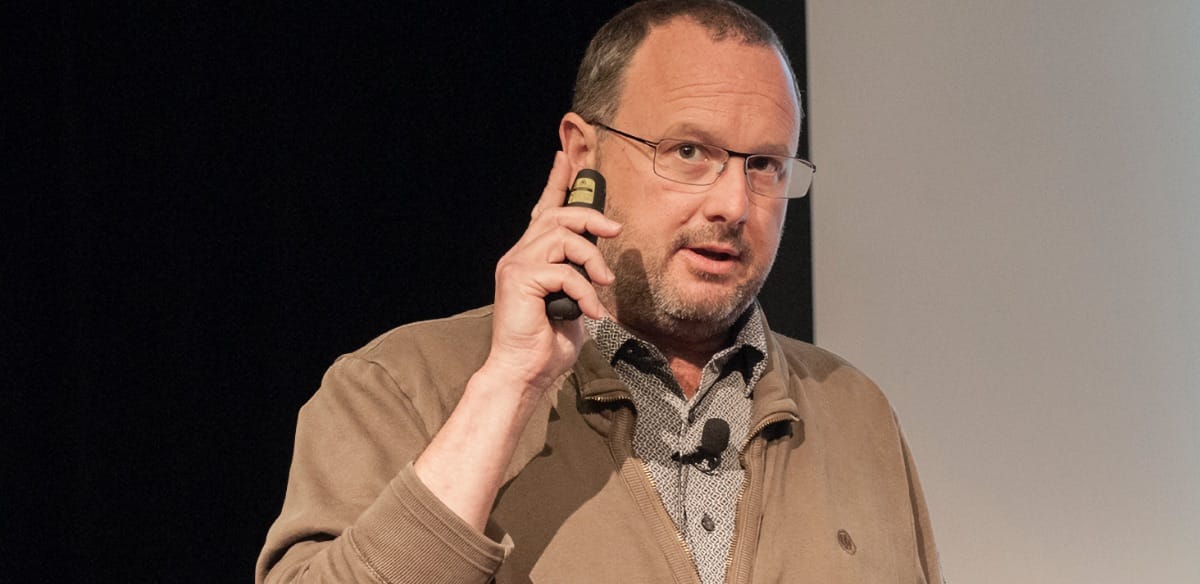
Clarke Ching, The Bottleneck Guy
Ensuring your people have the resources they need, motivating and directing them, and coordinating their efforts to avoid bottlenecks is now your primary job. And it’s a big one. That’s why focusing too much on your own work is a trap. Too often it means the boss becomes the bottleneck while the team waits for a decision or an approval from above.
Why is it a trap that many would-be leaders fall into? I think our cultural admiration for hard work fuels an unhealthy admiration for “busyness”, whether it’s actually productive or not. Too many bosses feel guilty about not pulling their weight if they’re not constantly working. So they try to contribute as a “doer” while also leading the team. In consequence, they shortchange their time for reflection and long-term planning — the stuff that doesn’t look like “work” but which is essential if they’re to provide a productive destination for their team.
Communicating With Your Team
How do you convert this “team orientation” into action? The single most important thing any leader does is communicate openly and transparently with their reports.
Not knowing what’s going on is hugely demoralizing to your staff. Worse, it infantilizes them. If they’re not aware of the larger context of their work, they can’t make their own decisions when circumstances change. Instead, every little bump or obstacle means they have to check back with you for a decision, wasting your time and robbing them of any ownership over their work.
As a manager or head of a business unit you’ll attend staff meetings and briefings that will keep you much better informed than your reports. It should become almost instinctual to make notes at these or relevant information for passing on to your team. Of course, you need to sort out what’s useful and interesting to them. Just lazily passing on all the memoranda, policy notes, and other briefing materials you receive, without applying any sort of filter, wouldn’t be doing them any favours.
I learned this early in my first career. Fresh out of the Canadian Army's Officer Candidate school, I took up my first Regimental posting as a Troop Leader. Which meant my Second-in-Command was a Sergeant, whom I technically outranked, but who had vastly more experience than me. One morning, as we were chatting about some upcoming training, he turned to me and asked, “Hey sir, do you know what annoys the troopies (soldiers) more than anything else?”
I knew this was a test, so I thought very hard before replying: “They hate not knowing what’s going on.”
“Damn right,” he said. After that, despite my inexperience, and many mistakes, we always got along.
(Of course, I’m substituting “annoys” here for the much stronger word he actually used.)
The Weekly Team Meeting
The easiest and best way to maintain good communication with your staff, is formalizing the process with a regularly scheduled team meeting. For most workplaces, once a week is about the right tempo.
I’m well aware that endless meetings have become the bane of office life. But the problem isn’t too many meetings; it’s too many ineffective meetings. An effective weekly team meeting replaces dozens of frustrating emails, phone calls, messages, and one-on-one discussions, more than paying back the time it takes.
The trick is to ensure your team meetings are effective by:
- Scheduling it for the same day and time each week so it’s easy to remember and attendance becomes a habit.
- Picking a date/time that works with your teams’ schedules and other commitments. This should also be a good time for reviewing the previous week and coordinating activities for the upcoming week — Friday afternoons or Monday mornings tend to work well.
- Using your running notes mentioned above to prepare a meeting agenda and sending it to your team members at least a day ahead of time. Do this for even the simplest and most routine meeting. Effective meetings begin with everyone knowing the agenda and having time to prepare so they can contribute meaningfully to any discussions you intend to have or decisions that need to be made.
- Keeping your team meetings concise, focused, and limited to half an hour or less. Once your team is up to speed, this should be enough; you want to be respectful of your people’s time.
- Include the whole team in your regular team meeting, even your Executive or Administrative Assistant, if you have one. Having the whole team present means:
- You have all their expertise and experience available to generate ideas or devise solutions to issues, and
- If someone has done exceptional work or completed a project, you can recognize them in front of all their peers.
I can’t emphasize enough the importance of meeting the whole team as a group. Aside from giving you the benefit of their combined expertise, it facilitates a healthy team culture by ensuring:
- That all communication be transparent and open, with no back room deals or promises made to one member that are kept secret from the others.
- And, just as importantly, it keeps your team members aware of what each other is doing, enabling them to coordinate directly with one another and share resources where they have a common cause.
You’ll know your team is gelling when they keep the meeting going as they leave your office, comparing notes and making arrangements for helping each other out.
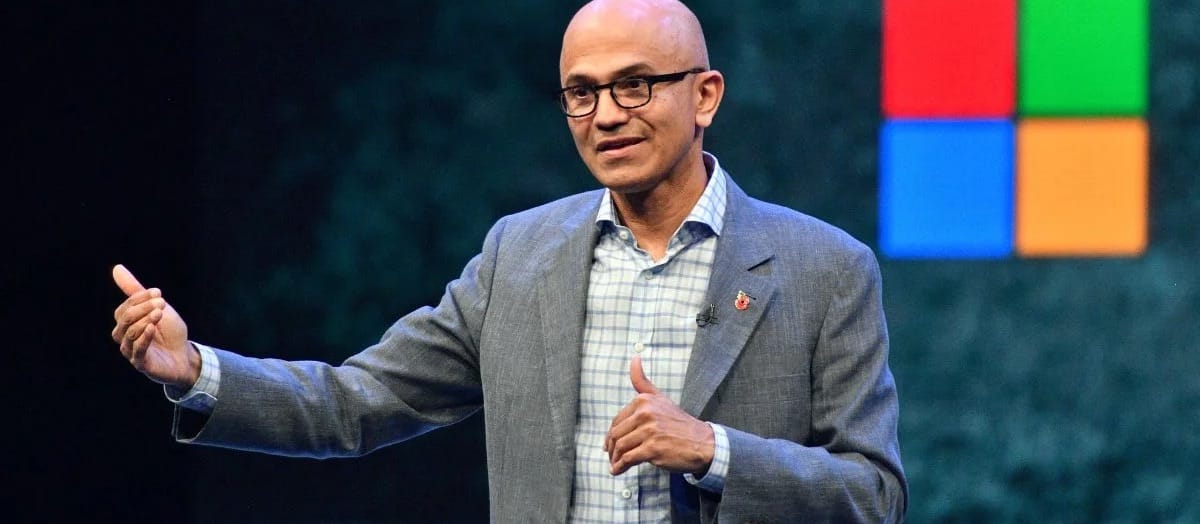
Satya Nadella, the current CEO of Microsoft testified to the importance of regular team meetings in a recent Yahoo Finance article. He finds them so valuable that he meets all his direct reports every Friday afternoon — for four hours! Once a month, this expands to an all-day Friday “Soak” where they bring each other up to date, make decisions, and brainstorm future strategies and initiatives.
If you’re not running a giant multinational corporation, your weekly team meetings probably don’t need that much time. But it shows the importance this high-performing executive places on getting the whole team together regularly.
Supporting Your Team
As useful as the weekly team meeting is, it’s not the right forum for certain discussions. Counselling and mentoring your individual reports, for example, is best done one-on-one. Likewise, if you need to course-correct a member of your team, that should be done separately. As the old saying goes: “Praise in public, criticize in private”.
It’s best not to leave these to chance. So, just as you formalize your team communications with regular meetings, you should also schedule regular one-on-one's with all your direct reports.
The Role of the One-on-One
Meeting individually with your whole staff can become time-consuming, and the weekly team meeting should take care of any immediate needs for information and coordination. So, about once a month for an hour is probably the right tempo for most one-on-ones.
These can be used for:
- Directing their work or delegating tasks.
- Receiving updates on their work and a progress report for their department.
- Discussing any budget or other resource requests they have that require your authorization or support.
- Providing advice and council.
That last point is more important than it might appear. Leadership is a lonely job, and the responsibility weighs heavily on anyone who takes it seriously. Often you’ll find your reports could use a shoulder to lean on. When that happens, take the time to listen. And, as you provide encouragement and your own perspective, don’t be too prescriptive. Most junior leaders just need to know they have your understanding and support as they tackle their own problems.
In that vein, the one-on-one meeting is an important opportunity to learn more about your staff better and show support. With these goals in mind it’s especially important you don’t micromanage while they’re updating you on their department and reporting on their progress. Focus more on listening than talking and let them get their point across before intervening (if necessary).
A new boss once asked me to run him through my department’s budget report in our first one-on-one. I had several lines of business, and he wanted to understand how they worked together. However, he became so obsessed with digging into the first line item (well beyond any level of detail he needed to know) that we spent our whole hour on that alone. We had to end the meeting before discussing anything else. Meaning I didn’t get a chance to pitch a couple of initiatives I needed his approval for.
They say you never get a second chance to make a first impression, and our relationship never recovered from that first meeting. I always regarded him as a micromanager who didn’t trust me to supervise the day-to-day operations of my unit. And who, therefore, couldn’t be trusted with too much detail about what I was doing.
Listening & Mutual Respect
A common mistake I see from many new leaders is that they become so busy keeping their people informed, and impressing their vision on the team, that they forget to SHUT UP!
Not listening to your team is a huge problem. It means you’re talking at them, not with them. Genuine communication goes both ways. Aside from the fact that you'll be much less annoying, stopping and listening to your people will make you a more effective leader in at least three different ways:
- With their different backgrounds, your team members will have experience and expertise you lack. In the case of long-serving members, this often takes the form of deep technical or specialist knowledge.
- Your team members also need your support, often in the form of budget and other resources outside their level of authority. They need you to provide these or, when they’re beyond your own authority, to lobby higher management for them. If you never listen, you’ll never know what they need.
- And, as you climb the greasy pole to higher and higher levels of authority, you move further and further away from the coal face, where the real work is done. Your reports are at least one level closer to this working level than you are. Failing to listen to them will make you more and more isolated.
The common element here is respect; in a healthy team this is mutual. A good leader respects the expertise and perspective their people bring and the hard, important work they do. Only a fool thinks they know everything, or can do everything themselves alone.
A frequent question in my leadership workshops is how to deal with disaffected team members who won’t contribute, even the implementation of a weekly team meeting, and even when they’re encouraged to speak. This is typical behaviour when mutual respect breaks down.
Assuming the person isn’t a total write-off who should never have been hired in the first place, they probably had ideas to contribute at one time. But a lack of opportunity to present these, or too many meetings where only the boss got to speak, soured them against the team.
Turning things around will require rebuilding the trust and respect that’s been lost. That should start at their next one-on-one by asking questions about themselves and why they’re not working with the team. You could explore what they would want to be doing with their time instead. This will demonstrate that, whatever their experiences in the past, they now have a genuine chance to be heard and to contribute.
You’ll probably have to make it clear eventually that their behaviour is unacceptable. But, as is so often the case, real communication begins with listening.
The Importance of Courage
Given all this, why do so many bosses still fail to communicate effectively? It's the single most common leadership shortcoming in every organization I've worked with.
Often this is the consequence of bosses losing sight of their real priorities and letting themselves be overwhelmed by busywork. Less commonly, they lack the empathy needed to care, and the emotional intelligence needed to understand their obligation to support and direct their staffs.
Even good leaders, though, can find themselves reflexively holding back information. Humans have a natural tendency to equate knowledge with power. So it’s easy to fear that if your team knows too much, they might decide they don’t need you. Or, they might bypass you and go directly to the higher level boss, claiming all the credit for themselves and making you look weak and ineffective.
Such fears may be understandable but, after many, many years of leading teams (yes, I’m old), I can honestly say that they’re also pathetic and wrong-headed. No matter how well-informed you keep your team, you retain the title and formal authority of the unit’s leadership. As such, you are the conductor of your team. No-one else is in a position to coordinate their efforts and no-one else can take your place as the public face of the team.
Another Army story: during my stint as a Troop Leader, I was tasked by my Squadron Commander to run a machine gun range at the local facility. By then I was canny enough to know my Sergeant had much more experience than me, and had run many, many ranges there. So I spent a lot of time picking his brain and running my ideas by him before I drafted my plan and stood up on my hind legs to give orders for the range day.
The outcome was such a success that the Squadron Commander called me into his office afterwards to say congratulations for a job well done. Trying to be a good leader, I modestly replied that my Sergeant deserved the credit. My commander just stopped me and said, “Sergeant X doesn’t work for me; you do. So, I’m telling you: ‘good job’. If you feel Sergeant X deserves some of that credit, you can pass it on.”
It was a good lesson that the responsibility you assume as leader of a unit is a double-edged sword. You will be blamed when things go badly. But, you will also receive the praise when your team does well. (I’ll have more to say about authority and responsibility in a future post.)
So, don’t be afraid to empower your people. Keep them well-informed and give them genuine ownership of their work. Anyone worth their salt will be happier and perform better when they have your trust and, with it, the initiative to run with their projects.
Ironically, of course, their success will reflect on you. So, have the courage to take your people into your confidence. And the generosity to pass on the praise their work brings.

“Courage is the first of human qualities because it is the one which guarantees the others.”
⸻ Socrates
Setting an Example
This post has emphasized that a good leader focuses on their team. When you do so, however, you'll notice something a little unnerving. They are looking back at you! Being in a position of authority means your reports will notice almost everything you do, and pick up on signals you're not even be aware you’re sending.
If you return from a senior level meeting looking stressed out and worried, the team will notice and assume something has gone wrong. If, in a busy moment, you treat one of your people offhandedly, they’ll assume both that you don’t think much of that person, and that such behaviour is acceptable.
I noticed this phenomenon early in my Army career, when my home Regiment had a Change of Command. As a very junior Lieutenant, neither I nor my troops saw much of the new Commanding Officer. And yet, incredibly quickly, the culture of the whole unit changed. There was a greater expectation that even small things would be done right, and done on time. And a more formal courtesy between all ranks became the new standard.
It was my first experience of how profoundly the culture of a unit trickles down from the top. Whether you like it or not, being a boss means you’re a role model. So, try to be a good one. This doesn’t mean putting on a phoney or happy face, or pretending to be someone you’re not (dishonesty is fatal). But it does mean presenting your best self in public.
One last Army story: my first headquarters appointment was as S03 (Staff Officer Grade 3) Training for a Brigade HQ. I reported to the S03 Operations, a bluff old Major who liked to start each day with a hearty “good morning” for everyone as he strode down the hall to his corner office. Not long after I began working for him, we had an exercise run into some snags. For a while it looked as though we might have to cancel, which would have been hugely embarrassing.
I had the task of staffing an amended plan we hoped would retrieve the situation. I came in very early one morning to finish up and, as it needed the Major’s signature, anxiously awaited his arrival. Soon I heard him approaching, shouting his usual sunny “good morning” into everyone’s door as he passed. The second he reached his desk, I rushed in, draft in hand. While he read it, I commented, “Gee sir, you have a cheery word for everyone, even when things are going wrong.”
He paused a moment to sign my document, then looked me in the eye and said emphatically: “Especially when things are going wrong.”
Leadership is a Relationship
I began this post by saying that becoming a leader is a form of service; I’ll finish by stating the obvious: leadership is not the one-way exercise of authority, but a relationship built on loyalty and trust.
A staff will obey their boss because they have to, but a team willingly following a leader they trust is a far more creative and productive force.
So, leadership matters. And real leaders know that a relationship only works when its obligations are mutual. That is, you gain your team's respect when you show them respect. You gain their trust when you offer trust. And you earn their loyalty by demonstrating loyalty to them.
Checklist
You’re becoming a leader (and not just a boss) when you can put a check next to the following statements.
- When you attend executive or senior staff meetings, you almost instinctively make note of points you should pass on to your own team.
- You hold regular meetings with your whole team.
- You hold regular one-on-one meetings with your direct reports.
- You are not the only person who speaks at these meetings.
- Team members have ample opportunities to collaborate with each other.
- Team members feel it’s safe to disagree with you (and sometimes do).
- Team members pass the knowledge you provide on to their own reports.
- If asked, team members would say:
- That they are aware of the goals, activities, and culture of the larger organization.
- That they have a good knowledge of their department’s goals and activities.
- That they clearly understand their own tasks and deadlines, and
- How these fit into the larger organization’s goals and objectives.